- New Apple Store to Open in Southern Beijing’s Livat Shopping Centre
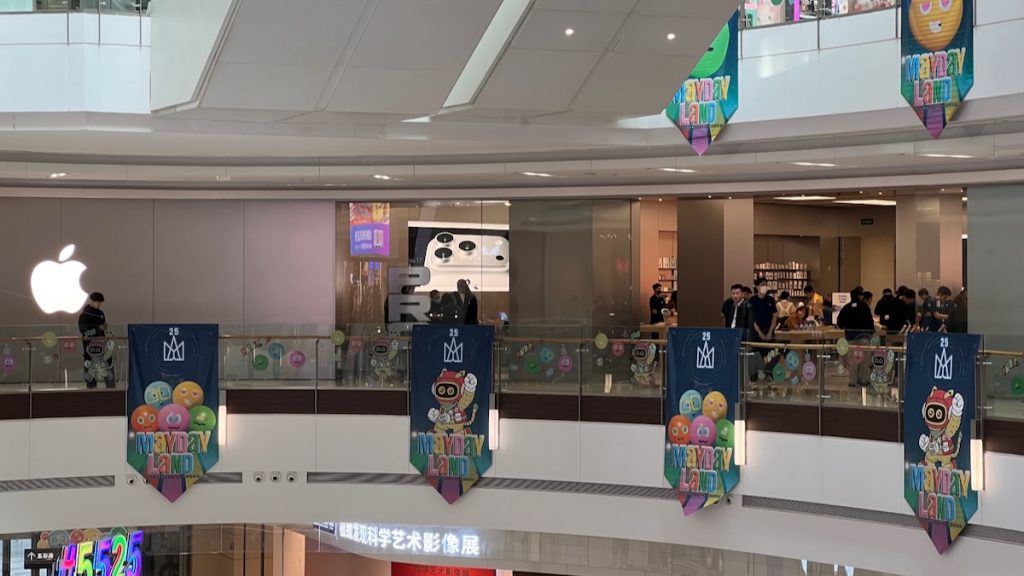
All signs point to the opening of the Apple Store Livat Beijing at 10:00 (UTC+08:00) on Saturday, 06 December 2025. On a day typically associated in the West with St Nicholas, this is indeed quite an early gift for southern Beijing.
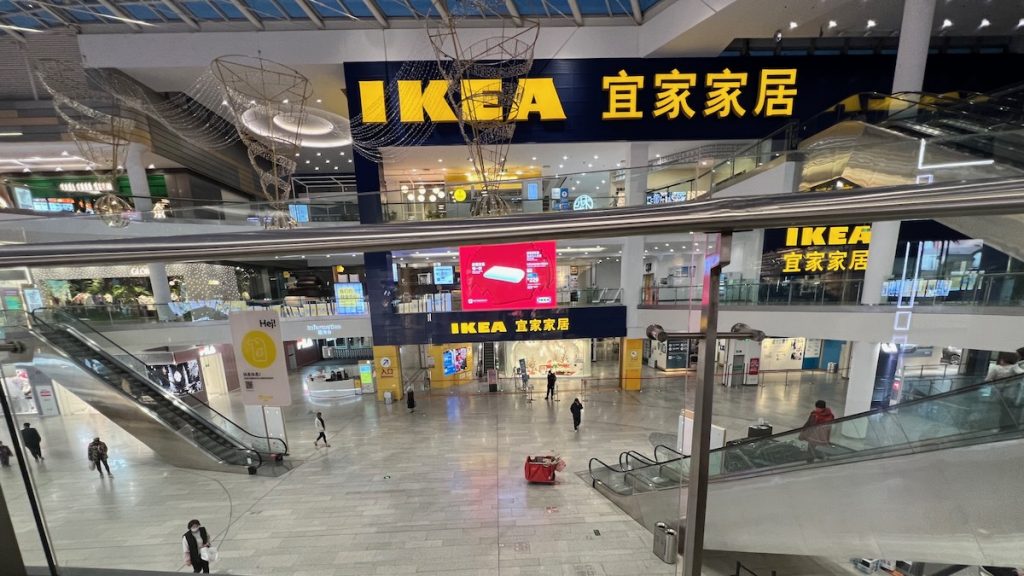
The Livat Centre finds itself in Daxing, southern Beijing, beyond the 5th Ringway (which defines built-up central Beijing). This would then make it the southernmost Apple Store in the Chinese capital.
Featuring a mostly Scandinavian design, Livat is also home to the second IKEA in Beijing — interestingly packed over two levels instead of the usual three. The entire shopping centre is busy especially on weekends and holidays, and sports an expansive, covered car park.
Livat Centre Beijing finds itself right by Xihongmen (西红门) Beijing Subway station on the Daxing line. The new store will be at ground level.
This would be the 6th Apple Store in Beijing, and the 9th across Northern China (the Beijing + Tianjin + Hebei area). The district of Daxing, which has seen visible urbanisation in recent years, is in southern Beijing, and hosts Beijing’s new Daxing Airport.
- About… Everyone’s Favourite Fruit Company…
Apple hasn’t been quite the same without Steve. I personally lionise him, for sure, as a kind of a Great Leader, although certainly not the same way Pyeongyang does of its dictators, but it’s a given that Jobs rescued Apple out of the abyss that — and I have to say this, incompetent Gil Amelio couldn’t but help digging. Mike Spindler, I’m sure, he got Apple deeper into trouble — I see him personally as a kind of an anti-Steve — and Amelio did himself the greatest favour of all time by bringing Steve Jobs back — but Steve certainly brought Apple back to greatness. It was, thus, a foregone conclusion that Jobs was simply going to nuke Amelio of his position at Everyone’s Favourite Fruit Company, and bring his company into greatness, once again.
Tech wars between the platforms were especially visible in the 1990s. Microsoft, or rather MS, imperialism, was dominant — and so was their rampant, shameless nicking of Apple’s UI elements. (Xerox might hate us, too, actually.) But they for sure blew it with the Start button, which is not even half as useful as the Apple menu, certainly in the pre-Mac OS X (as we called it back then) era. To be honest, I had very much my WTF moment when Apple devices started using Intel chips — was that not those from our sworn enemy?… Wintel?… so when Apple started doing its own chips, I was relieved — and thought it super-smart.
In the early 2000s, things were very different on the ground in Beijing. Macs were still expensive as hell, the idea of an Apple Store in China was a universe and a quasar away, and people still paid cash. The railways were run as a direct, central government ministry, SMS had “just” been greenlighted for locals to send (they could receive those from abroad), and car chases were done on old manual VW Santanas where the presence of a fifth gear itself was a luxury. I had just returned from Switzerland — everything about China was actually alien to me, from the pull-string-to-flush squat toilets to paper tickets for then-miniscule Subway systems — and mobile phones were becoming tiny (especially those by Motorola). WAP was a nothingburger (it didn’t work well in Switzerland, either), touchscreens were so futuristic they didn’t even feature on Disney’s Rescue Rangers, and state employees were still reeling from being laid off in the 1990s from highly inefficient state organisations.
It was on 02 March 2002, that in northwestern urban Beijing, seven Mac people from seven countries started the Beijing Macintosh User Group (BeiMac) as it was back then, representing Europe, Asia, Oceania, and the Americas. Around 6 years later, I started a blog (techblog86) focusing on technology, media, and startups in Greater China. (This was after my previous stint at “blognation” for China, where Robert Scoble tuned into my then-tweets at the Chinese Blogger Conference 2007.) Both in 2002 and 2008, China was still very much in a different tech era. Takeaway delivery was hardly a thing; a credit card was the most advanced mode of payment (swipe — chip readers were rare back then), and iPhones were only for the rich from abroad — or secretly nicked by incompetent mandarins from alien lands. Cash still ruled king, rail tickets were still on paper, and the SARS outbreak still saw mass deployment of paper forms. Chinese communicated with each other through a mix of QQ, Xiaonei/Renren, MSN Messenger, and maybe Apple iChat. Public loos were cleaner, but were still very elementary stuff. And Apple opened its first Store only in the second half of 2008.
Today, post-Covid China (remember them health codes/Covid passes?) appears very different. Greater China sports multiple Apple Store presences on the Mainland, Hong Kong, Macau (yes! even there), and Taiwan. Takeaways are now all the rage, some promising delivery within 30 minutes, and QR codes and remote transactions are the new normal (not even Apple Pay is seen as “cool” or “cutting-edge” any more). iPhones are available for everyone (but so are other smartphones — Huawei and Co, in particular). If you don’t exist on WeChat, you don’t (really) exist in Chinese cyberspace — simple as that. Smart loos and urine analysis machines dot the newest toilets. Self-driving taxis are the new thing, baby. And now, artificial intelligence finds itself not just in the hand of adults, but also kids — AI is part of the national curriculum, increasingly. In 2008, if you had a dog, it would be a “real” one; today, robodogs are not a rare sight at all (especially for enforcement and defence). (I have yet to see them twerk, though, a la Spot Mini!)
As the former President of the Beijing Macintosh User Group (2002-2011) and previously also the publisher of techblog86 (since 2008, for a few years), I’d like my Apple / tech / mobile / innovative startup mic back, thanks. This is now my new, personal blog, taking a good look at the world of Apple, technology, mobile, and innovative startups across Greater China. The name is an amalgamation, quick and easy, of BeiMac (Beijing Macintosh User Group) and techblog86. I am also known for Trains (and bringing microphones with enormous foam covers in my bags), and there’ll be some crossover. It’s a relaunch that was worth it. A relaunch, a revival, of thinking different, blogging different, and doing this a different way.
Let’s see what’s next. Welcome to beimac86.
15 October 2025 | Zhengzhou, Mainland China | MacBook Air M2